
Pilgrim guide
What to do in Pandharpur, Omkareshwar & our other holy towns
Darshan, snan, parikrama and quiet devotion — the experiences worth your time at every kshetra the Sansthan serves.
Each of our towns has its own rhythm. Pandharpur moves with the Wari and the chant of Vitthala; Omkareshwar and Trimbakeshwar turn around their Jyotirlingas and holy rivers; Alandi rests at the feet of Mauli; Girada and Adgaon offer the rarest experience of all — stillness. This guide walks through what to do in each place, so your days there are unhurried and complete.
Pair each section with our how-to-reach guide to plan the journey, and call the seva team on +91 74610 49390 to confirm your room — every experience below is easier with a Bhakt Niwas a short walk from the darshan.
What to do in Pandharpur
Pandharpur, on the banks of the Chandrabhaga in Solapur district, is the spiritual capital of the Varkari sampradaya. The traditional order of the pilgrimage begins with a snan in the Chandrabhaga — the crescent-shaped stretch of the Bhima river — followed by darshan of Lord Vitthal and Rukmini at the main mandir. The riverfront ghats are especially beautiful in the soft light of early morning and evening, and the quieter early darshan hours suit families with elders.
The town itself rewards an unhurried day. The Pundalik Mandir stands on the riverbank, dedicated to the devotee whose service to his parents brought the Lord to stand on a brick; the Vishnupad temple and the Gopalpur shrine, associated with the Gopalkala festival, lie along the pilgrimage route with many smaller temples and maths between them. During Ashadhi and Kartiki Ekadashi the streets fill with lakhs of Varkaris and the abhangs of the saints — the most devotional time to be present, and the most crowded.
Devotees with more time often extend the yatra by road to Tuljapur, seat of Goddess Tulja Bhavani, and Akkalkot, the abode of Shri Swami Samarth — both within reach of Pandharpur.
- Snan in the Chandrabhaga at the ghats before darshan
- Darshan of Shri Vitthal Rukmini Mandir
- Pundalik Mandir and the Vishnupad temple on the riverbank
- Gopalpur shrine, associated with the Gopalkala festival
- Day excursions to Tuljapur and Akkalkot
What to do in Omkareshwar
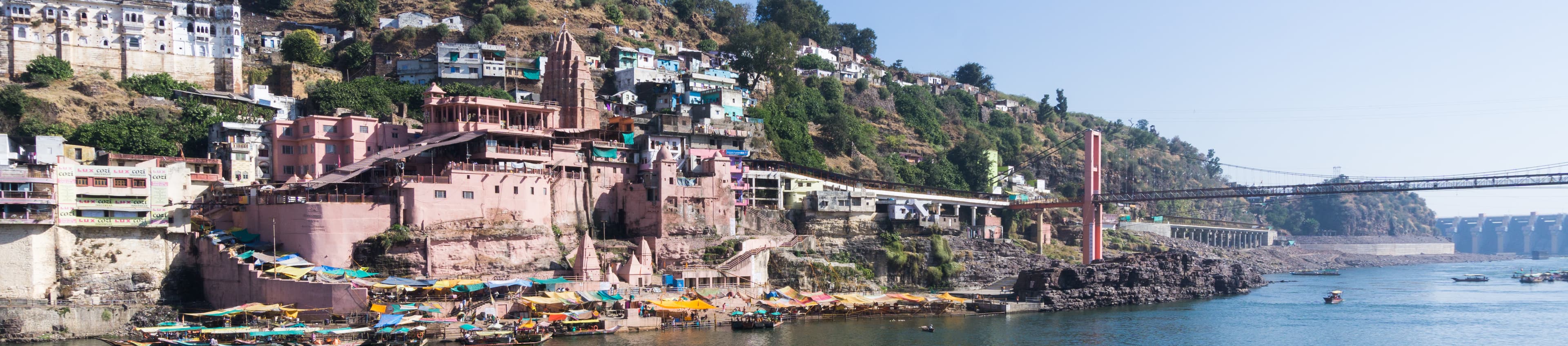
Omkareshwar honours two Jyotirlinga shrines on either bank of the Narmada — Omkareshwar on Mandhata island and Mamleshwar (Amareshwar) on the southern bank — and devotees traditionally seek darshan at both. The island itself is shaped like the sacred symbol Om, and the parikrama of the island, past smaller shrines, ghats and viewpoints along the river, is one of the most cherished practices of the kshetra.
The day begins with a snan at the Narmada ghats before darshan, and closes with the evening aarti, when lamps are reflected on the water — one of the most beautiful sights in the town. Omkareshwar is also a traditional starting and resting point for the far longer Narmada Parikrama, and sadhaks on that great circumambulation pause here for darshan, snan and rest. Shravan, the Shravan Somvars and Mahashivratri are the most charged occasions, with Kartik Purnima and Narmada Jayanti also deeply auspicious on the ghats.
- Darshan of the Omkareshwar Jyotirlinga and Mamleshwar across the Narmada
- Parikrama of the Om-shaped Mandhata island
- Morning snan at the Narmada ghats
- Evening aarti with lamps reflected on the river
- A rest halt on the greater Narmada Parikrama
Stay at the Omkareshwar Bhakt Niwas How to reach Omkareshwar
What to do in Trimbakeshwar
Trimbakeshwar, in the green foothills of the Brahmagiri near Nashik, enshrines a Jyotirlinga unlike any other — a linga with three faces representing Brahma, Vishnu and Mahesh. Darshan of the Jyotirlinga and a snan at the Kushavarta Kund, revered as the origin point of the river Godavari, form the heart of every visit. The climb up the Brahmagiri hill, past the Gangadwar where the river first appears, is itself a revered act of devotion.
Trimbakeshwar is also the foremost centre in India for ancestral and dosha-nivaran rituals — Narayan Nagbali, Kalsarp Dosh Puja, Tripindi Shradha and Pitru Dosh puja — performed by authorized local priests over fixed numbers of days. Devotees with extra time visit Anjaneri, believed to be the birthplace of Lord Hanuman, and the Panchavati area of Nashik with the Kalaram Temple, Sita Gufa and Ramkund on the Godavari; Saptashrungi at Vani and the Pandavleni caves lie further afield.
- Darshan of the three-faced Trimbakeshwar Jyotirlinga
- Snan at Kushavarta Kund, the origin of the Godavari
- The Brahmagiri climb via the Gangadwar
- Narayan Nagbali and Kalsarp Dosh pujas through authorized priests
- Nearby: Anjaneri and Nashik's Panchavati
Stay at the Trimbakeshwar Bhakt Niwas Why Trimbakeshwar is sacred
What to do in Alandi
Alandi Devachi, on the Indrayani river near Pune, is the town where Sant Dnyaneshwar Maharaj — Mauli — took Sanjeevan Samadhi in the thirteenth century. The day here is planned around darshan at the Samadhi Mandir and the daily aartis, beginning with the early morning kakad aarti. Around the mandir lie the Indrayani ghats, the ancient ajan vriksha and several smaller shrines connected to the saint's life; a snan in the Indrayani followed by darshan is the heart of every visit.
Alandi rewards stillness as much as sightseeing — the riverfront is serene at dawn and dusk, and devotees sit in dhyana, paath and chintan after Mauli's darshan. Close by is Dehu, the birthplace of Sant Tukaram Maharaj, and many devotees visit both towns together; the Palkhi departure for Pandharpur ahead of Ashadhi Ekadashi is the most extraordinary — and most crowded — time to be present.
- Darshan at Sant Dnyaneshwar Mauli's Samadhi Mandir
- Early morning kakad aarti
- Snan and quiet reflection at the Indrayani ghats
- The ajan vriksha and shrines around the mandir
- A visit to Dehu, birthplace of Sant Tukaram
What to do in Girada
Girada, a village in Washim district, is chosen not for its sights but for its stillness. Set amid the fields and open skies of rural Vidarbha, the days here open up for japa, paath, reading and silent reflection — mornings quiet and well-suited to prayer, evenings calm under the open sky. For devotees in the tradition of Shree Gajanan Maharaj, it is a place to deepen devotion in solitude before or after the busier kshetras.
The surrounding region offers gentle excursions when you want them. Washim town is an ancient settlement with old temples and tanks, including the well-known Balaji temple and the Padmatirth, while Shegaon, Pohradevi — revered as the Banjara Kashi — and Karanja Lad, associated with Shri Nrusinha Saraswati, are all within reach by road.
- Quiet japa, paath and reflection in a village setting
- Washim's Balaji temple and the Padmatirth
- Excursions to Shegaon, Pohradevi and Karanja Lad
What to do in Adgaon
Adgaon, at Post Adgaon in Washim district, offers what devotees describe as absolute silence and tranquility. The Bhakt Niwas keeps meditation gardens on the premises — a serene space for dhyana, paath and slow reflective walks in the early morning and evening — and the retreat's unhurried rhythm suits sadhaks, elders and families seeking a devotional pause.
As at Girada, the wider Vidarbha region lies open for darshan excursions: Shegaon and its Anand Sagar complex, the ancient temple town of Washim, Pohradevi and Karanja Lad can all be woven into the stay. Many devotees plan Adgaon as the still centre of a larger circuit — a few days of silence before or after the great kshetras.
- Dhyana and reflective walks in the meditation gardens
- Maun, japa and paath in absolute quiet
- Excursions to Shegaon, Washim, Pohradevi and Karanja Lad
What to do in Shegaon
Shegaon, in Buldhana district, is the samadhi kshetra of Shree Gajanan Maharaj — the principal seat of the saint whose spirit of seva inspires every Bhakt Niwas of the Sansthan. Darshan at the main temple is the heart of the visit, and devotees from across India arrive through the year for the blessings of Maharaj.
The serene Anand Sagar complex, developed by the Shegaon Sansthan, gives pilgrims a peaceful, green space for reflection after darshan. Devotees travelling through Vidarbha often pair Shegaon with the quiet retreats at Girada and Adgaon and the old temples of Washim, making a complete circuit of darshan and stillness.
- Darshan at the samadhi temple of Shree Gajanan Maharaj
- Quiet reflection at the Anand Sagar complex
- A Vidarbha circuit with Washim, Girada and Adgaon
Plan your Shegaon stay on the Shegaon Sansthan website The story of Shree Gajanan Maharaj
Keep planning
The rest of your yatra.
How to reach each town
Road, rail and air routes with the nearest stations and airports.
Read the guide
Why each place is sacred
Jyotirlingas, samadhis and holy rivers — the significance of every kshetra.
Read the guide
Stories behind the temples
Pundalik's brick, the Om-shaped island and the three-faced linga, retold.
Read the guide
Or browse all pilgrim guides
Darshan questions, answered.
What are the main things to do in Pandharpur?
The traditional order is a snan in the Chandrabhaga followed by darshan of Shri Vitthal Rukmini Mandir. Devotees also visit the Pundalik Mandir and Vishnupad temple on the riverbank and the Gopalpur shrine, with day excursions possible to Tuljapur and Akkalkot.
What should I not miss at Omkareshwar?
Darshan at both Jyotirlinga shrines — Omkareshwar on Mandhata island and Mamleshwar on the southern bank — the parikrama of the Om-shaped island, a morning snan at the Narmada ghats and the evening aarti, when lamps are reflected on the river.
What can pilgrims do in Trimbakeshwar besides darshan?
A snan at Kushavarta Kund, the origin of the Godavari, and the climb up Brahmagiri via the Gangadwar are central to the pilgrimage. Trimbakeshwar is also India's foremost centre for Narayan Nagbali, Kalsarp Dosh Puja and other ancestral rituals performed by authorized local priests.
Is there anything to do at Girada and Adgaon?
Girada and Adgaon are quiet rural retreats meant for japa, paath, dhyana and rest rather than sightseeing — Adgaon has meditation gardens on the premises. Both make a peaceful base for excursions to Shegaon, the old temples of Washim, Pohradevi and Karanja Lad.